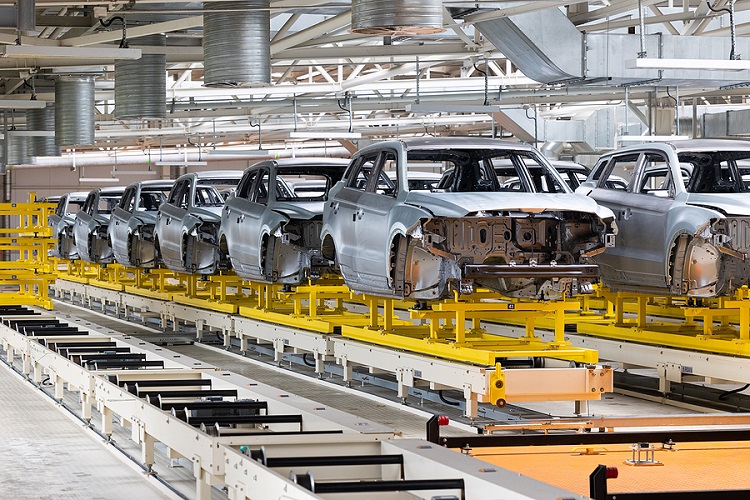
The automotive industry has always been at the forefront of innovation. From Henry Ford’s moving assembly line in 1913 to today’s advanced robotic arms, every leap in technology has redefined how cars are built. Today, automation is transforming car manufacturing at a scale never seen before.
Driven by robotics, Artificial Intelligence (AI), the Internet of Things (IoT), and big data, modern factories are evolving into smart factories—highly efficient, precise, and adaptive production systems. This article explores how automation is changing car manufacturing, its benefits, challenges, and what the future holds for the industry.
The Evolution of Automation in Car Manufacturing
Automation in car manufacturing is not a new concept. Early automation focused on mechanical machines that performed repetitive tasks, reducing human labor. Over the decades, automation has advanced from simple conveyor belts to sophisticated robots capable of welding, painting, and assembling with pinpoint accuracy.
Today, automation extends beyond physical robots—it includes AI-driven analytics, machine learning algorithms, and cloud-based monitoring systems that optimize entire production lines in real time.
Key Areas Where Automation is Transforming Car Manufacturing
1. Robotic Assembly Lines
Robotics has become a cornerstone of modern car factories. Robots handle tasks such as:
- Welding body parts with precision.
- Painting with consistent quality and minimal waste.
- Installing components like windshields and doors.
Robots improve speed and accuracy while reducing workplace injuries from hazardous tasks.
2. Artificial Intelligence (AI) and Machine Learning
AI is enabling smarter factories by analyzing data from machines and sensors to:
- Predict equipment failures before they occur.
- Optimize production schedules.
- Improve quality control through computer vision systems that detect even the smallest defects.
AI not only increases efficiency but also enhances adaptability, allowing factories to shift production quickly when demand changes.
3. 3D Printing and Additive Manufacturing
Automation is complemented by 3D printing, which allows carmakers to create prototypes and even final parts quickly and cost-effectively.
For example, BMW and Ford use 3D printing to manufacture lightweight components, reducing costs and speeding up innovation.
4. Internet of Things (IoT) Integration
IoT connects machines, robots, and sensors in real-time. This connectivity enables:
- Remote monitoring of production lines.
- Real-time tracking of parts and inventory.
- Automatic adjustments to reduce downtime.
IoT-powered automation ensures smoother workflows and reduced inefficiencies.
5. Autonomous Mobile Robots (AMRs)
Factories now deploy AMRs to transport parts, tools, and materials across production floors. Unlike traditional automated guided vehicles, AMRs use AI and sensors to navigate independently, adapting to changes on the factory floor.
This reduces manual labor and improves logistics efficiency within factories.
6. Digital Twins
A digital twin is a virtual model of a physical system. In car manufacturing, digital twins simulate entire production processes, helping managers test changes before implementing them in real life.
This minimizes errors, saves costs, and boosts innovation.
Benefits of Automation in Car Manufacturing
- Higher Efficiency – Automated systems work around the clock without fatigue, increasing production output.
- Improved Quality – Robots and AI reduce human error, leading to consistent and high-quality vehicles.
- Cost Savings – While initial investment is high, long-term savings from reduced labor costs, faster production, and lower error rates are significant.
- Worker Safety – Automation handles hazardous tasks like welding and painting, reducing accidents.
- Flexibility – Automated systems can adapt to new models and market demands quickly.
- Sustainability – Precise automation reduces material waste and energy consumption, supporting greener manufacturing.
Challenges of Automation in the Automotive Industry
Despite its advantages, automation also brings challenges:
- High Initial Costs – Implementing robots, AI, and IoT systems requires significant investment.
- Job Displacement – Workers in repetitive manual jobs may be replaced, raising concerns about unemployment.
- Complex Maintenance – Automated systems require specialized technicians to manage and repair advanced machinery.
- Cybersecurity Risks – As factories become digitally connected, they are more vulnerable to cyberattacks.
- Skill Gaps – Workers need retraining to operate and manage automated systems effectively.
Case Studies: Automation in Action
- Tesla’s Gigafactories – Highly automated facilities with robots handling welding, painting, and battery assembly at massive scales.
- Toyota – Combines human expertise with automation, ensuring flexibility while maintaining traditional craftsmanship.
- BMW – Uses digital twins and AI-powered robots for faster and more precise manufacturing processes.
These examples highlight how leading automakers leverage automation to stay competitive in a rapidly evolving market.
The Human Role in Automated Manufacturing
While automation reduces the need for manual labor, it does not eliminate the human role. Instead, workers transition into more skilled positions, such as:
- Programming and maintaining robots.
- Managing data analytics systems.
- Overseeing quality assurance.
- Innovating new processes and designs.
This shift emphasizes the importance of reskilling and upskilling the workforce to thrive in an automated environment.
The Future of Automation in Car Manufacturing
Looking ahead, automation will continue to evolve in exciting ways:
- AI-Driven Factories – Fully automated factories capable of self-learning and adapting to new demands.
- Collaborative Robots (Cobots) – Robots designed to work safely alongside humans, improving teamwork on assembly lines.
- Sustainable Manufacturing – Automation will integrate renewable energy and green practices to reduce carbon footprints.
- Hyper-Personalization – Automated systems will allow for greater customization of vehicles without increasing costs.
- Global Connectivity – Cloud-based systems will enable automakers to manage and monitor factories worldwide in real time.
By 2040, as highlighted on EVBlogs, the automotive industry may see “lights-out factories”—facilities run entirely by machines with minimal human presence.
Conclusion
Automation is not just changing car manufacturing—it is redefining it. From robotic assembly lines and AI-powered analytics to digital twins and autonomous logistics, the automotive industry is entering a new era of efficiency, quality, and sustainability.
While challenges such as high costs, cybersecurity, and job displacement remain, the benefits of automation far outweigh the drawbacks. By combining human creativity with machine precision, automakers are building smarter, safer, and more sustainable vehicles.
For car manufacturers and enthusiasts alike, the rise of automation signals an exciting future where innovation drives the industry forward at unprecedented speed.